WEEKLY UPDATES

Week 1
During the first week, we were given an introduction to Game Studies: all the topics that we were going to go through and the various parts of the coursework that were expected from us. After forming a group of five, we chose the team name "Valentine," inspired by the game Final Fantasy.

Week 2
To begin our exploration of analogue games, we brought a deck of poker cards to class and experimented with various card games. We played “Golf,” “Bullsh*t”, “Old Maid,” and “Chor Dai Di.” Each game offered a different style of play and level of strategy, giving us valuable insights into mechanics and player dynamics. After trying out these games, we decided to delve deeper into “Chor Dai Di,” choosing it as the focus of our further research due to its engaging gameplay and unique set of rules.


exploration of analogue games ; framework example

Week 3
We brought one more card game to test out: "Funemployed." Alongside this, we were required to try out some digital games, so we explored digital drawing games like Skribbl.io and Gartic Phone. After considering the games we had experimented with, we decided to choose "Chor Dai Di" from the previous week as our main source of inspiration for developing our game and came up with some simple gameplay frameworks for it.


testing out 'Funemployed' and playing ChorDaiDi again ; one of the digital games--Skribbl.io
Week 4
We conjured up a basic idea for a "Chor Dai Di" game that included shifting "elemental suits" and cursed cards, where the goal was to conserve cards rather than simply get rid of them, based on discussions from the previous two weeks. However, we felt the idea needed more substance, as we found ourselves confused and continuously adding new rules while trying it out. Dr. Charles provided feedback, advising us to refine the story to establish a solid foundation for building our game mechanics. He also suggested incorporating a roleplay element, allowing players to take on different roles or characters within the game to enhance the experience.


trying out the new idea with the cards ; process of creating the curse, situation & elemental cards
Week 5
We considered using Alice in Borderland as the starting point for our themes, as it featured interesting interpretations of traditional poker suits. However, it led us to the idea of characters falling into rabbit holes, sinkholes, or other worlds like Alice in Wonderland. Soon after, the question arose: Where do socks disappear to in the wash? This culminated in “bubble spirits called 'Sudsprites' gathering people from the dirtiest parts of society, trapped in their own spin cycles and desperate for a washout". From there, we developed our proposal slides, recorded our presentation, and uploaded it to YouTube while updating the e-portfolio according to the current meta.
Week 6
We played our game together for the first time! Although we didn't have the actual printed cards, we used paper to write down the names and details of each card. We recorded the time taken for each round and experimented with different winning methods, such as changing the criteria for escaping and winning by collecting a certain number of "socks." During the playtest, we discovered minor issues and identified parts that needed adjustments to ensure clearer gameplay. These insights were only evident through real experience. Overall, the game was really interesting and fun! We also decided to incorporate illustrations of items that are ranked according to their usefulness for each element (suit). This ranking system will help players quickly identify which items are most effective in various scenarios, enhancing their strategic decision-making during gameplay. Also, created a survey form for the playtest.


trying out the finalized idea for the game-- Sudsprite Spin ; soap and sock tokens, character cards, curse cards, situation cards
Week 7
There was no class on this week.
Week 8
During ILW, we had an optional class for those seeking feedback on their progress. Emily and Yun Yue attended the class to consult with Dr. Charles. Yun Yue had neatly made and cut out the cards, drawing on all of them, and mentioned that she had already playtested the game with her friends. Both of them discussed possible changes and browsed Pinterest together to decide on a color theme.
Afterward, we had an online meeting to ensure everyone were able to participate the discussion after inviting Dr. Charles to review their draft cards and asked several questions about the game studies module, such as how many playtests are required. He also suggested visiting a board game café as a group, where we might meet people from the board game industry and even invite them to playtest our game. He strongly recommended that we could make the game a success and copyrighted if everything is really done well.


draft cards made by YY ; rough sketch on design by emily
Week 9
We finally had the opportunity to play our game with Dr. Charles. Watching him interact with the mechanics and storyline was both nerve-wracking and exciting. It was rewarding to see the game in action, and we all had a great time playing it. Afterward, Dr. Charles offered helpful feedback and thoughtful suggestions for improvement. With his input in mind, we eagerly started brainstorming ways to make the game more balanced and enjoyable for everyone.


play testing our game with Dr. Charles
Week 10
This week, we focused on refining the story for our game. We worked on creating a complete narrative that seamlessly blends the gameplay with the world of the Sudsprites. After coming up with two different interpretations of the story, we had a lively discussion and ultimately decided on the one that would become our final storyline. The process was not only fun but also rewarding, as we ended up with a story that felt engaging and unique.
Besides that, we created another draft set of the game for playtesting. This allowed us to conduct simultaneous playtests with different groups of people in separate locations, ensuring more diverse feedback and insights.

second draft set
Week 11
This week, we held a public playtest for our game. We invited classmates, friends, and even a few strangers to try it out. In the morning, we tested the game with our classmates without explaining any rules, relying solely on the rulebook to see if it was clear and easy for first-time players to follow. We recorded their gameplay and shared a Google link for them to provide feedback. Afterward, we played their games and shared our feedback as well. Later, we played our game with friends and some strangers. While some players found parts of the rules confusing, others discovered creative strategies we hadn’t thought of. Their feedback was incredibly valuable, and we took detailed notes on what worked and what needed improvement.


public playtests
Week 12
This week, with no class scheduled, we finalized the data we had collected and exported it for inclusion in our ePortfolio. We then focused on dividing tasks effectively. Three members were assigned to prepare and deliver the presentation, while the other two took charge of organizing and executing the game demo. This division of labor helped ensure we stayed on track and made progress toward our goals.
We also split the workload for designing game components and cards, creating the final presentation slides, and updating the rulebook. This ensured each task was managed efficiently, with a focus on aligning everything to the game’s theme and mechanics. Our collaborative efforts aim to produce a polished and cohesive final outcome.
Week 13
This week, we met with Dr. Charles to review the content of our presentation slides in detail. He provided valuable advice on how to structure the presentation for maximum impact and pointed out key elements to add to the slides. He also reminded us of the deadline for the final project video, emphasizing the importance of finishing both the slides and the video on time.
We recorded our game demo in class, which took about 3 to 4 attempts before we successfully completed the recording. Once that was done, Mei Hui took on the task of editing the video. This allowed us to focus on other aspects while she worked on ensuring the demo was polished and ready for presentation.

recording game demo in class
Week 14
We successfully completed all the drawings and designs for the cards and tokens digitally, ensuring that each element was carefully crafted to align with the game's theme and mechanics. After finalizing the designs, we sent everything off for printing. The box for the Sudsprite Spin was also designed, incorporating elements that reflected the theme, and we reworked the elemental cubes to match the color scheme, ensuring consistency across all components.
Once the items were printed, we realized that some components, like certain cards and tokens, still needed to be cut out manually. We gathered as a team to carefully trim and prepare these pieces, making sure they were ready for playtesting and future use. This hands-on work allowed us to see everything come together and made us feel even more connected to the physical components of the game.

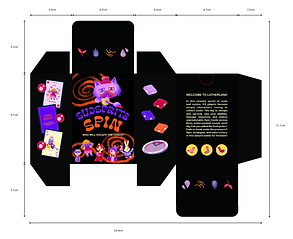
examples of the design
Week 15
We completed our presentation slides, making sure they were visually appealing and easy to present. Next, we practiced our parts to ensure smooth transitions between speakers during the presentation. Once we felt prepared, we recorded our final project video presentation using Zoom. Afterward, we submitted the playtest data along with the video presentation to Dr. Charles.
We also completed our individual reflections and made sure everything was included on the website.

recording final project video presentation using Zoom